Building a Local Research Hub for Infectious Diseases Where It Is Needed Most
Infectious disease outbreaks and climate-related health threats are placing increasing pressure on health systems across West Africa. To strengthen local scientific capacity and improve preparedness, we joined forces with the Alexander von Humboldt Foundation and established the Bayer-Humboldt Research Hub – Center for Emerging and Re-emerging Infectious Diseases (HRH-CERID).
As a locally rooted hub of scientific excellence, HRH-CERID brings cutting-edge genomics and disease surveillance capabilities directly to the frontlines, enabling faster and more effective responses to infectious diseases where they are needed most.
Across West Africa, infectious diseases such as malaria continue to pose significant public health challenges, from recurring outbreaks to newly emerging threats. According to the Economic Community of West African States (ECOWAS) Regional Centre for Surveillance and Disease Control, the region recorded 67 outbreaks of emerging and re-emerging infectious diseases in 2024 alone, highlighting the scale and urgency of public health emergencies.
These challenges are further intensified by the effects of climate change. Floods, droughts, and rising temperatures facilitate the spread of infectious diseases and place additional pressure on already stretched health systems. As a result, effective disease surveillance and rapid response capabilities are more critical than ever to protect vulnerable populations and strengthen regional health security.
Strengthening scientific capacity in communities most affected by infectious diseases
In 2021, together with the Alexander von Humboldt Foundation, we supported the establishment of HRH-CERID led by Prof. Olusola Ojurongbe, at Ladoke Akintola University of Technology (LAUTECH) in Ogbomoso, Nigeria, with research collaboration partners at the Institute of Tropical Medicine, University Hospital, Tübingen in Germany and the Institute of Endemic Diseases, University of Khartoum in Sudan. More than just a laboratory, HRH-CERID was envisioned as a center for scientific excellence that would build research capacity directly within the communities most affected by infectious diseases. Rather than relying solely on external expertise during health emergencies, the hub set out to develop the infrastructure, skills, and partnerships needed for locally led research, disease surveillance, and outbreak response.
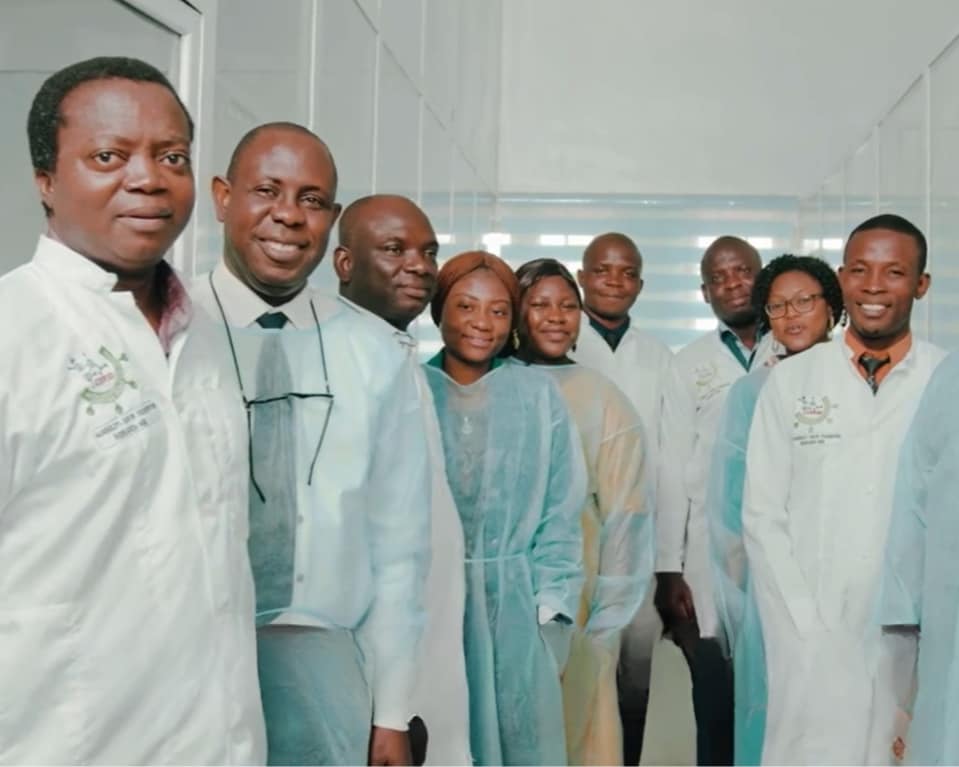
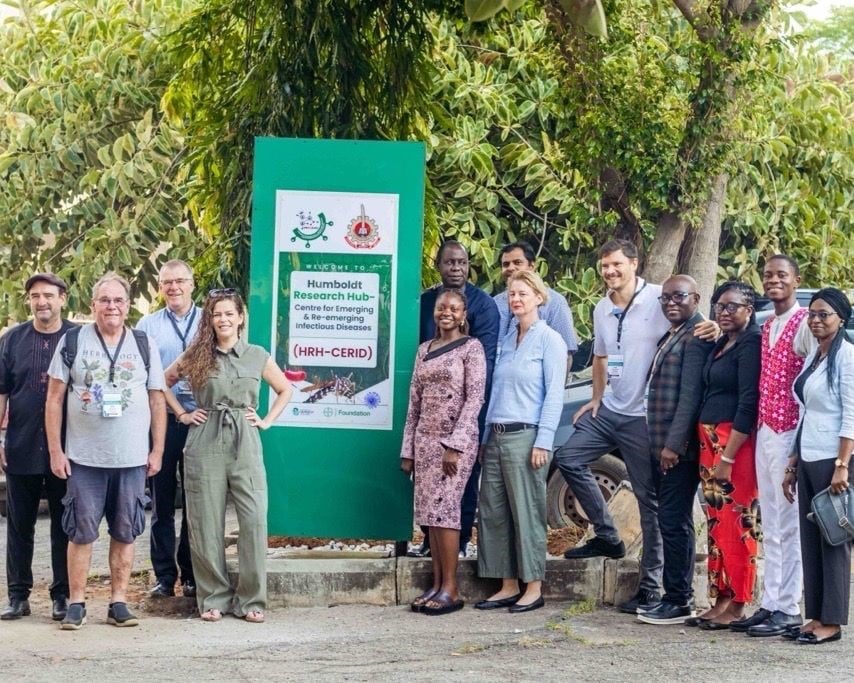
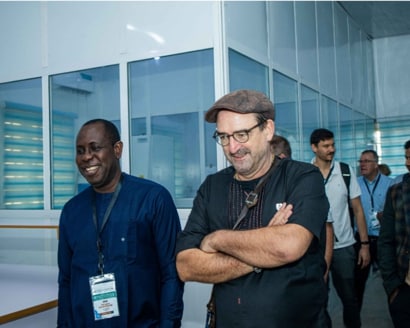
Connecting scientists and experts from around the world and fostering collaborations at the International Conference on Emerging and Re-emerging Infectious Diseases, October 2025
HRH-CERID investigates major health threats affecting the region, including malaria, viral outbreaks, antimicrobial resistance, and diseases that can spread from animals to humans. The center also studies how climate change influences the spread of infectious diseases and public health. From the beginning, HRH-CERID pursued a set of ambitious but also practical goals:
• Establish genomics capabilities for disease surveillance and quick outbreak response,
• Advance research in infectious and non-infectious diseases,
• Train the next generation of scientists, healthcare professionals, and laboratory specialists,
• Ensure disease surveillance and outbreak identification through genomic facilities,
• Develop biobanking capacity for infectious disease samples.
Building the laboratory and overcoming challenges
Over the past five years, HRH-CERID's progress has not come easily. The hub faced significant obstacles, including delays in procuring equipment and reagents, unreliable electricity supply, and limited prior genomics training among students. Political instability in Sudan also disrupted implementation plans and prevented a laboratory from being fully established there.
Despite these challenges, HRH-CERID continued to move forward and successfully established a genomics laboratory at LAUTECH, equipped with advanced sequencing and molecular genomics technologies, including Oxford Nanopore Technologies. In addition, the center focuses on building a platform for genomic capability and local expertise, scientific training, and locally relevant infectious disease research.
To date, 121 scientists and postgraduate students have participated in molecular biology and bioinformatics training programs at HRH-CERID. In addition, HRH-CERID has made a significant investment in human capacity development by fully supporting the training of six M.Sc. students in Medical Microbiology and Parasitology, one M.Phil. student in Biochemistry, and two PhD students in Medical Microbiology and Parasitology. The project also supported the development of early-career researchers by providing advanced technical training and facilitating international research exchange opportunities in Germany.
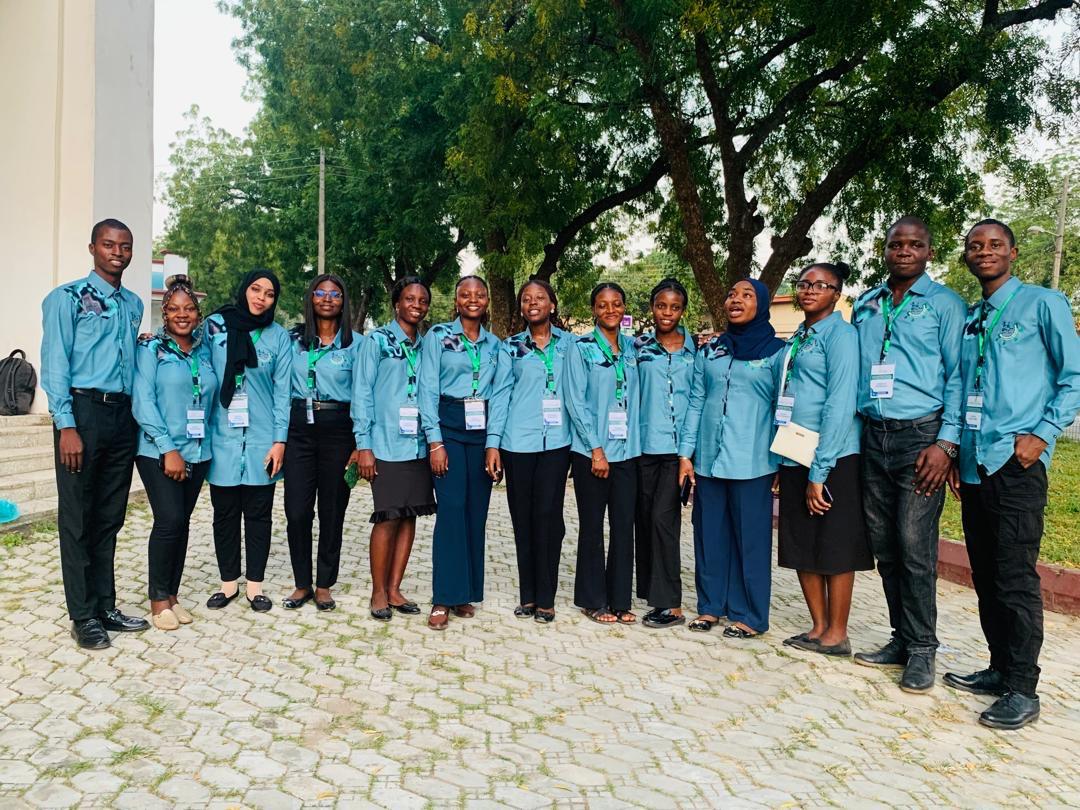
A cross-section of postgraduate students and administrative staff at HRH-CERID
HRH-CERID is now recognised as a genomics-capable laboratory within LAUTECH and a member of Nigeria's National Genomic Sequencing Consortium. Researchers affiliated with the hub have contributed to 18 peer-reviewed scientific publications. One of its latest studies, conducted with researchers from the Max Planck Institute for Infection Biology in Berlin, was published in Nature Communications, one of the world's leading scientific journals. This reflects both the quality of its research in the region and its growing contribution to the global scientific community.
Ultimately, HRH-CERID demonstrates what can be achieved when scientific excellence is built and sustained locally. By investing in infrastructure, training, and international partnerships, the center is strengthening the region's ability to detect and respond to infectious disease threats while empowering a new generation of African scientists to develop solutions for the health challenges facing their communities. Its success illustrates how locally led research can contribute not only to regional health security but also to global scientific progress.

“When HRH-CERID was established, our vision was to build the scientific capacity needed to detect, monitor, and respond to infectious disease threats in the region. Five years later, we have shown that this expertise can be developed locally through investment in people, infrastructure, and partnerships. Today, HRH-CERID is not only supporting research and surveillance in Nigeria but also contributing to regional and global scientific collaboration.”
Prof. Dr. Olusola Ojurongbe, Head of HRH-CERID
Taken together, HRH-CERID represents far more than a successful project. It demonstrates how scientific capacity can be built locally, strengthening the region's ability to detect and respond on time to infectious disease threats. Through training and international exchange opportunities, the center is also empowering a new generation of African scientists to develop solutions to the health challenges facing their own communities.